⭐ Must-see · Al Souq, central Doha
Souq Waqif
The standing market, where old Doha comes alive after dark
🎧 Listen to this guide · about 6 min
Pop your earphones in and we'll walk you round.
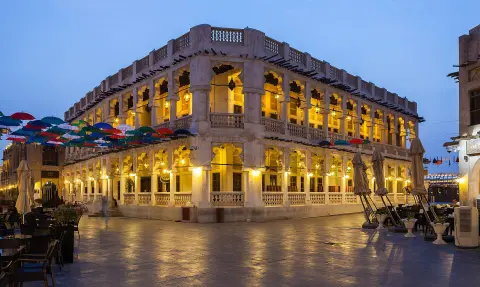
Welcome to Souq Waqif, the old heart of Doha. Come in the evening, when the heat lifts and the lanes fill. Lanterns glow on mud-plastered walls. The smell of cardamom, oud and grilled meat drifts between shops. Men in white thobes sip tea at low tables, families stroll, and you might hear the bells of a cart or the call to prayer rising over the roofs. This is where the city still gathers. You can shop for spices and scarves, peer at hooded falcons, or simply sit and watch. There is no right way to do it. Wander, get a little lost, and let the market come to you.
The story of Souq Waqif
The market grew up beside Wadi Musheireb, a dry riverbed that once ran down to the sea through old Doha. For at least a century, Bedouin and townspeople traded here, mostly in livestock, wool, dates and everyday goods. The name means the standing market. The usual explanation is that traders stood to sell, displaying their wares at the gates and along the wadi.
As oil money transformed Doha, the old souq declined. By the 1990s many of its buildings were run down, and in 2003 a fire destroyed much of the market. In 2006 the government began a major restoration, supported by the Emir, Sheikh Hamad bin Khalifa Al Thani, and Sheikha Moza bint Nasser. Buildings from after the 1950s were removed, older ones were repaired, and the market was rebuilt in traditional style. Metal roofs gave way to timber beams and bamboo, and the walls were finished in earth-toned plaster. The main work was complete by 2008.
Today the souq is both a working market and the city's favourite evening meeting place. During the 2022 FIFA World Cup it became the gathering point for fans from all over the world.
The setting
The souq spreads in a loose grid of covered lanes and open squares just inland from the Corniche. The buildings are low, with thick walls finished in mud-coloured plaster, projecting wooden beams and shaded walkways. The main lane runs east to west and is lined with restaurants and cafes. Behind it, narrower alleys hold spice sellers, textile shops, perfume stalls and dealers in incense and household goods. To one side lies the falcon souq and its neighbouring stables. Beyond the market rise the spiral minaret of the Abdulla Bin Zaid Al Mahmoud Islamic Cultural Center and, in the distance, the towers of West Bay.
Why it matters
Souq Waqif shows how a modern city chose to keep a living link to its past. The restoration was careful enough that it feels lived in rather than staged. Local families shop here for spices, abayas and gifts, and old men still meet for coffee. For visitors, it is the easiest place in Doha to feel the rhythm of daily life. It also sets the pattern for how the Gulf now restores its old quarters, mixing heritage with hospitality.
Your walk-through
The stops a guide would take you to, in order.
-
1
The main lane
Start on the main east to west lane in the early evening. Look up at the wooden beams jutting out from the plaster walls. In old Gulf buildings these beams held up the roof, and they cast neat striped shadows by day. Now look around you at the tables. Shisha pipes, small glasses of sweet tea, platters of grilled meat. This is the social heart of the souq, and it stays busy until late, especially at weekends.
-
2
The spice lanes
Turn into the side lanes where the spice sellers work. Sacks are rolled open at the top, piled with dried limes, turmeric, saffron, cardamom and frankincense. Ask to smell the dried black limes, called loomi, used in Gulf rice dishes and stews. The traders are used to visitors, and many will happily explain what each spice is for. A small bag makes a light and lovely souvenir.
-
3
The falcon souq
Now head to the falcon souq. Here you will see falcons perched on padded blocks, their heads covered with small leather hoods that keep them calm. Falconry is an old and deeply loved tradition in the Gulf. The shops also sell gloves, hoods and even tracking devices for hunting birds. Nearby is the Souq Waqif Falcon Hospital, set up in 2008, which treats birds brought in by their owners.
-
4
The stables
Next to the falcon area are the stables, where you may see Arabian horses and camels. Before cars, these animals were the backbone of trade and travel across the peninsula. In the evening you might catch riders passing through the lanes. Keep a respectful distance, and always ask before taking photographs of people or their animals.
-
5
The animal and bird market
If you are curious, the pet market sells songbirds, parrots, rabbits and other small animals. It is a corner of real local commerce, though conditions here have been criticised by animal welfare advocates, and some visitors prefer to skip it. If you go, simply look and move on.
-
6
Back toward the Corniche
Finish by walking toward the sea. As you come out of the lanes, the spiral tower of the cultural centre rises beside you, and beyond the road the lights of the bay come into view. Many people end the evening on the Corniche, strolling under the palms with the West Bay skyline glowing across the water. It is a fine contrast: the old souq behind you, the new city ahead.
Things you might not know
- The name Souq Waqif means the standing market.
- A fire in 2003 destroyed much of the old market before its restoration began in 2006.
- The souq has its own falcon hospital, founded in 2008.
Researched November 2026 from: en.wikipedia.org, atlasobscura.com, thepeninsulaqatar.com. Fees and hours change, so check on the day.