⭐ Must-see · Gueliz, 2 km from central Marrakech
Jardin Majorelle
Blue sanctuary of art, plants and quiet wonder
🎧 Listen to this guide · about 4 min
Pop your earphones in and we'll walk you round.
You stand at the entrance to Jardin Majorelle in Gueliz. The electric blue walls greet you first. Jacques Majorelle planted this garden almost a century ago. Yves Saint Laurent and Pierre Bergé later saved it. Today you walk paths lined with rare plants from five continents. The light shifts through bamboo and cactus. Birds call overhead. The air smells of jasmine and warm earth. Take your time. This place rewards slow steps and quiet attention.
The story of Jardin Majorelle
French painter Jacques Majorelle arrived in Marrakech in 1917. He bought a palm grove in 1923 and began the garden. In 1931 he commissioned architect Paul Sinoir to design an Art Deco studio. He painted its walls a vivid cobalt he later patented as Majorelle blue. He opened the garden to the public in 1947. After his death in 1962 the garden declined.
In 1980 Yves Saint Laurent and Pierre Bergé bought the property to prevent its sale to hotel developers. They restored the plantings and buildings with landscape architect Madison Cox. Saint Laurent died in 2008; his ashes were scattered in the rose garden of Villa Oasis, the couple’s private house beside the garden, and a memorial stands in the public garden. Pierre Bergé donated the site to the Fondation Pierre Bergé – Yves Saint Laurent. The Berber Museum opened in the former studio in 2011. The nearby Yves Saint Laurent Museum opened in 2017.
The setting
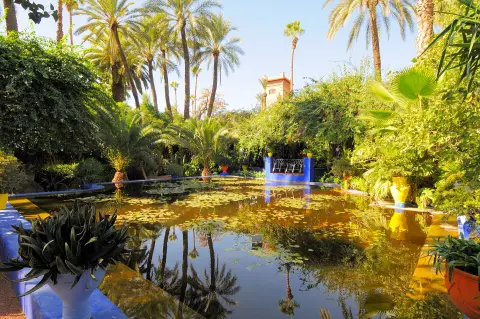
The garden covers roughly 9,000 square metres in Gueliz, a short distance from the medina. High walls enclose a series of paths, pools and terraces. The Art Deco studio, now the Berber Museum, stands at the centre in intense Majorelle blue. Villa Oasis, the former residence, remains private except for limited access. Cacti, palms, bougainvillea and bamboo create layered views. Pink gravel paths replace lawns in places. Water features reflect the sky. The layout feels both structured and wild, a deliberate composition of colour and form.
Why it matters
Jardin Majorelle preserves a rare example of early 20th-century botanical collecting and modernist design in North Africa. It honours Amazigh culture through the Berber Museum collection. The site links French artistic traditions with Moroccan heritage and contemporary fashion. It demonstrates successful private conservation that now benefits the public. Profits support ongoing maintenance and new projects. The garden offers residents and visitors a green refuge in the city.
Your walk-through
The stops a guide would take you to, in order.
-
1
Entrance and blue walls
Pause at the gate. The intense cobalt blue frames every view. Jacques Majorelle created this shade in the 1930s and used it throughout the garden. Notice how the colour changes with the light. It makes the surrounding greenery appear even more vivid. The walls once enclosed his private world. Now they welcome you into the same space.
-
2
Central pool and cactus garden
Follow the path to the long central pool. Majorelle collected cacti and succulents from the Americas and Africa. They thrive in the dry Marrakech climate. Look for the tall yuccas and agaves. Their sharp forms contrast with softer palms nearby. The pool reflects the blue studio and sky. This was the heart of his botanical laboratory.
-
3
Berber Museum studio
Enter the former studio, now the Pierre Bergé Museum of Berber Arts. Majorelle painted here from 1931. The collection shows textiles, jewellery, ceramics and weapons from Amazigh communities across Morocco. Each piece tells stories of daily life and craftsmanship. The building itself remains a striking example of 1930s modernism.
-
4
Bamboo grove and water features
Continue to the bamboo grove. Tall stalks rustle in the breeze. Majorelle brought many species from Asia. Small fountains and channels carry water through the garden. Listen to the sound. The planting creates cool microclimates even on warm days. These areas feel like hidden rooms within the larger landscape.
-
5
Yves Saint Laurent memorial
Near the end of the main path you reach the memorial to Yves Saint Laurent: an ancient Roman column brought from Tangier. After his death in 2008 his ashes were scattered in the rose garden of Villa Oasis, the private house next door. This corner connects the garden’s two great protectors. It remains a place of quiet reflection.
Things you might not know
- Majorelle patented his signature blue pigment after creating it for the garden structures.
- The garden now holds more than 300 plant species collected from five continents.
- Yves Saint Laurent and Pierre Bergé bought the property in 1980 specifically to stop hotel development.
Researched November 2026 from: jardinmajorelle.com, en.wikipedia.org, museeyslmarrakech.com. Fees and hours change, so check on the day.