💎 Hidden gem · Schynige Platte, above Wilderswil, 13 km from central Interlaken
Schynige Platte Alpine Garden
An old cog train to a mountain flower garden
🎧 Listen to this guide · about 6 min
Pop your earphones in and we'll walk you round.
Welcome to Wilderswil, just outside Interlaken. Your train is waiting, and it is a beauty. Wooden carriages, open windows, a little electric engine that pushes from behind. This railway has been climbing to the Schynige Platte since 1893, and it still takes its time. Nearly an hour of slow, steady climbing through forest and meadow. At the top, almost 2,000 metres up, you will find a garden. Not a garden of roses, but of edelweiss, gentians and hundreds of other plants that grow wild in the Swiss Alps. Around it, the Eiger, Mönch and Jungfrau stand in a row. Below, the two lakes shine. It is gentle, quiet and lovely. Sit by a window.
The story of Schynige Platte Alpine Garden
The Schynige Platte Railway opened in 1893, at the height of the Alpine railway boom. It was built to carry visitors from Wilderswil up to a viewpoint and hotel on the ridge, high above Interlaken. The name comes from the shining rock slabs on the mountainside, which glint in the sun, and schynig is an old local word for shining.
In 1927 a society was formed with a clear aim, to show and study as many Swiss alpine plants as possible in one place. Work on the garden began in 1928 on a plot of land beside the summit station, and it opened to the public in 1929. Scientists from the University of Bern have long been involved, using the garden for research and teaching.
The railway itself has hardly changed in spirit. It still runs on its narrow track with cog-wheel drive, and some of its carriages date back many decades, kept in service for their charm. The line is part of the Jungfrau Railways group. The garden has grown over the years and now shows several hundred species, sources give figures from around 600 to 800, arranged by the habitats they come from, such as limestone scree, moor and pasture.
The setting
The Schynige Platte is a ridge between Interlaken and the Lauterbrunnen and Grindelwald valleys. The railway climbs from Wilderswil through beech and spruce forest, then out onto open slopes with views over Lake Brienz and Lake Thun. At the top, the station, a hotel and the garden share a terrace of grassy shoulders. The garden covers more than 8,000 square metres, laid out along small paths that wind between rocks and beds, each labelled with its plant name. From its edges you look south across the valleys to the Eiger, Mönch and Jungfrau, and north down to the lakes. Hiking trails lead on toward the Faulhorn and First.
Why it matters
The Schynige Platte Alpine Garden is a living catalogue of Swiss mountain flowers, and a place where scientists study how these plants cope with cold, wind and short summers. That work matters more as the climate warms and alpine plants move higher. For visitors, it is the easiest way to learn what you are seeing on mountain walks. The railway, one of the oldest in the region, is a working piece of heritage. Together they offer a slower, quieter day than the big summits, without giving up any of the views.
Your walk-through
The stops a guide would take you to, in order.
-
1
Wilderswil station and the cog train
Start at Wilderswil station. Look at the train. The engine sits at the downhill end and pushes the carriages up the mountain. Underneath, a cog wheel grips a toothed rail between the tracks. That is how the train climbs such steep slopes. The line has been running since 1893. Sit on the right-hand side for the best lake views on the way up. Then settle in. The trip takes about 50 minutes.
-
2
Viewpoints on the climb
As the train climbs, the forest opens and the view gets wider. First you see Interlaken and the Bödeli spread below. Then Lake Brienz appears, often a deep turquoise, and Lake Thun beyond. Further up, the great snowy peaks come into view. Look at the rock faces beside the track. When they catch the sun, they shine. That is where the name Schynige Platte, the shining slabs, comes from.
-
3
Summit terrace
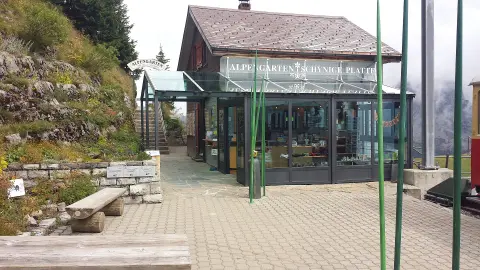
Step off at the top, at about 1,967 metres. Walk a few steps onto the terrace and look south. The Eiger, the Mönch and the Jungfrau stand side by side, with glaciers hanging from their flanks. This is one of the finest views of the trio anywhere. Breathe in. The air smells of grass and cold stone. Take your photos, then follow the signs to the garden, just beside the station.
-
4
The Alpine Garden paths
Inside the garden, follow the winding paths. Each bed shows plants from a different alpine habitat, from rocky scree to wet moor. Look at the labels. You will find gentians in deep blue, alpine roses in pink, and if you are lucky, edelweiss with its soft, woolly stars. The garden opened in 1929. Its work is serious science, but you can simply wander. Early summer, from late June to July, is when the most flowers bloom.
-
5
Garden lookout toward the lakes
At the far edge of the garden, find a spot looking north. Below you, the two lakes lie on either side of Interlaken like a pair of blue wings. Notice how the plants here hug the ground, low and tough, to survive wind and snow. Many alpine flowers have hairy leaves to keep warm, or deep roots to grip the rock. Sit for a moment. Watch the butterflies and bees at work.
-
6
Start of the Panorama Trail
If you have energy, walk a little way along the trail toward the Faulhorn. It is one of the classic ridge walks of the region, with views on both sides. The full hike to First takes several hours, so plan ahead and check the weather. If not, simply take a short stroll and come back to the terrace for lunch. The train down leaves regularly, and the ride back is just as beautiful.
Things you might not know
- The Schynige Platte Railway opened in 1893 and still runs with cog-wheel drive.
- The garden society was founded in 1927, and the garden opened to the public in 1929.
- The name comes from shining rock slabs on the mountainside, from an old local word for shining.
Researched November 2026 from: alpengarten.ch, en.wikipedia.org, en.wikipedia.org, jungfrau.ch. Fees and hours change, so check on the day.